Saudi Arabia Opens New Al-Jouf International Airport, Boosting Capacity to 1.6 Million Passengers
 Ashwini Gambo
Saudi Arabia has officially inaugurated the new Al-Jouf International Airport, marking a major milestone in the Kingdom’s regional aviation and infrastructure development. The opening ceremony was led by Prince Faisal bin Nawaf, Emir of Al-Jouf, and attended by Minister of Transport and Logistics Saleh Al-Jasser alongside senior officials.
The newly launched airport dramatically expands the region’s air travel capacity, increasing annual passenger handling to 1.6 million more than nine times the previous limit of 175,000 passengers. The expansion reflects rising demand for travel to and from northern Saudi Arabia and aligns with national efforts to strengthen connectivity and economic growth.
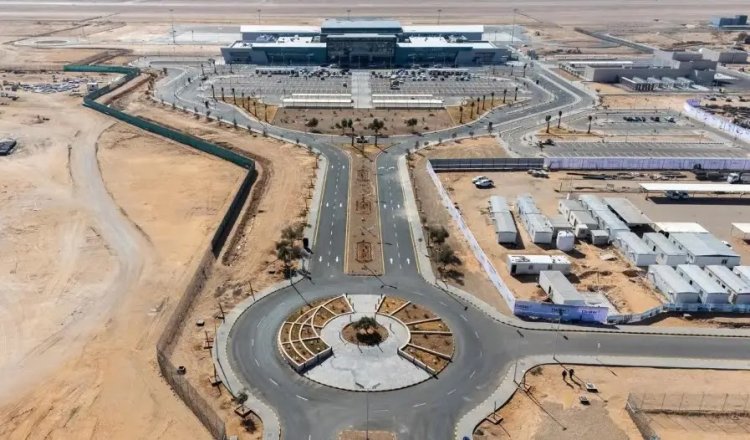
Covering an area of 24,000 square meters, the modern terminal is equipped with two passenger boarding bridges, seven departure gates, and four arrival gates serving both domestic and international flights. Passenger services are supported by 16 check-in counters, including two self-service units designed to streamline the travel experience.
To improve efficiency and passenger flow, the airport features seven smart gates and five dual passport control counters. Additional infrastructure includes 470 meters of baggage conveyor belts and parking capacity for 648 vehicles, ensuring smooth ground operations and convenient access.
Beyond transportation, the airport has been designed as a multi-use destination. It includes 1,700 square meters of commercial and investment spaces, as well as dedicated children’s play areas, enhancing the overall traveler experience.
Currently, the airport is served by three Saudi airlines and four international carriers, offering direct connections to major cities including Riyadh, Jeddah, Sharjah, Dubai, Cairo, and Assiut. Domestic travel dominates operations this season, accounting for over 70 percent of total flights, with Riyadh standing out as the busiest route at 38 weekly flights.
The new Al-Jouf International Airport is expected to play a key role in supporting tourism, trade, and regional development while strengthening Saudi Arabia’s growing aviation network.