In modern conflicts, credible media becomes a frontline of national defense
 supriyatunk
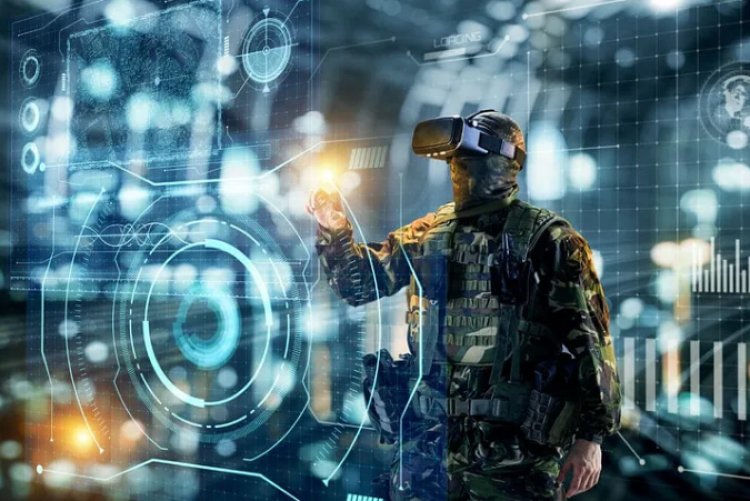
Modern conflicts are no longer fought solely with missiles, drones, and military formations. Increasingly, they are also waged through narratives, images, and digital content designed to shape perceptions and influence public opinion.
Recent developments in the region have once again demonstrated this reality. As the United Arab Emirates faced Iranian attacks targeting its skies, the country’s armed forces responded with precision and professionalism, intercepting hostile missiles and unmanned aerial vehicles with remarkable efficiency.
These defensive operations by the UAE Armed Forces helped protect the nation’s sovereignty while reassuring citizens and residents that the country’s security remains firmly safeguarded. Yet, alongside the military response, another equally important front has emerged, the information front.
The growing battlefield of information
Today’s battlefield extends far beyond traditional military operations. The flow of information has become a powerful tool capable of shaping public perception and influencing political outcomes.
This perspective was recently highlighted by Abdulla bin Mohammed bin Butti Al Hamed, Chairman of the National Media Authority, who described UAE media as a “battalion stationed in the trenches of awareness” and a protective shield safeguarding the home front.
He made the remarks during the Authority’s annual Ramadan gathering at Atlantis. The Royal in Dubai, where senior media leaders, editors, and communication officials discussed the evolving role of journalism during periods of national challenge.
His message was clear: in modern hybrid conflicts, the war on awareness can be just as consequential as events on the battlefield.
The danger of misinformation
In an era dominated by social media platforms, instant messaging and algorithm-driven information flows, misinformation can spread faster than verified facts. Rumors, manipulated images, and fabricated narratives can cross borders within minutes, often designed to provoke fear, confusion, or division.
Globally, both state and non-state actors increasingly use disinformation as a strategic tool aimed at eroding public trust in institutions and destabilizing societies. In this environment, professional journalism plays a crucial role. Responsible media organizations serve as a filter between raw information and public perception.
Through verification, context, and adherence to ethical standards, credible journalism helps ensure that society receives accurate and balanced information rather than emotionally charged speculation.
The role of coordinated communication
During periods of tension or crisis, clear and coordinated communication becomes essential. In the UAE, several national institutions work together to maintain a credible information ecosystem.
The National Media Authority plays a central role by working closely with editors, journalists, broadcasters, and digital platforms to ensure accurate reporting and professional media practices. Government communication bodies such as the Abu Dhabi Media Office and the Dubai Media Office have also become trusted sources of official updates and rapid responses.
Meanwhile, security and emergency response institutions, including the UAE Ministry of Interior, the UAE Ministry of Defense, and the National Emergency Crisis and Disaster Management Authority, provide verified information related to public safety and national security.
Together, these organizations form an integrated communication framework designed to ensure that facts reach the public quickly, often before rumors can gain traction.
Leadership and strategic communication
Behind this coordinated communication effort lies the strategic vision of Mohamed bin Zayed Al Nahyan, President of the UAE. His leadership has consistently emphasized calm decision-making, foresight, and national unity during periods of uncertainty.
This approach reflects a belief that stability is strengthened not only through strong institutions and preparedness, but also through clear and responsible communication with the public. In a region frequently affected by geopolitical tensions, such measured communication has become one of the UAE’s defining strengths.
Journalism and national resilience
For journalists and media organizations, the evolving nature of conflict places renewed emphasis on professional ethics. Accuracy, verification, and responsibility must remain central to journalism, particularly at a time when misinformation can easily be weaponized.
Professional journalism is not about amplifying every rumor or reacting impulsively to viral claims. Instead, it is about providing context, verifying facts, and guiding public discourse through reliable information.
Mainstream media outlets therefore carry a dual responsibility: reporting events as they unfold while also preventing misinformation from gaining legitimacy through careless amplification.
The responsibility of digital citizens
The information ecosystem today extends far beyond traditional media organizations. Social media platforms have transformed millions of individuals into potential creators and amplifiers of information. Every post, comment, or share contributes to the broader information environment.
This reality places a new responsibility on digital citizens. Online users are encouraged to ensure that their digital behavior reflects the values associated with the “Sons of Zayed": dignity, integrity, and self-confidence. Officials have also warned against engaging with provocative or abusive accounts that thrive on attention and emotional reactions.
In many cases, misinformation spreads precisely because it provokes strong reactions. Ignoring such narratives, rather than amplifying them, can often be the most effective way to limit their impact.
Users are also urged to exercise caution when sharing content from unknown sources, as such material may form part of deliberate psychological operations aimed at destabilizing societies.
Truth as a national asset
In the modern era, the strength of a nation is measured not only by its economic prosperity or military capabilities. It also depends on the integrity of its information environment.
When credible institutions, responsible media, and informed citizens work together, societies become far more resilient against attempts to manipulate public opinion or spread confusion.
The UAE’s coordinated approach to communication and responsible journalism offers an example of how modern states can safeguard public awareness in an increasingly complex digital landscape.
As conflicts increasingly extend into cyberspace and social media networks, the defense of truth has become a national priority, and credible media remains firmly on the frontline of that mission.