Etihad Rail unveils UAE’s first maglev trial with Italian firm IronLev
 supriyatunk
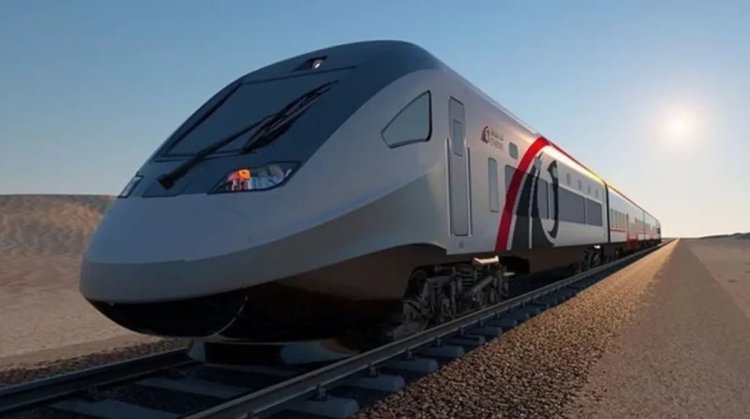
The future of transport in the UAE has taken a major leap forward, quite literally, with Etihad Rail officially unveiling a pioneering partnership with Italian technology company IronLev to launch the region’s first-ever magnetic levitation (maglev) rail trial.
Far from being a conceptual experiment, the trial signals a bold reimagining of how goods and eventually people could move across the UAE with minimal friction, lower energy use, and significantly reduced environmental impact.
What sets this initiative apart is its use of passive ferromagnetic levitation. Unlike conventional maglev systems that rely on specialized, energy-intensive tracks, IronLev’s technology employs permanent magnets to lift rail platforms above existing tracks without requiring continuous electrical power for levitation. This approach allows maglev benefits, smooth motion, reduced friction, and higher efficiency to be integrated directly into the UAE’s current rail infrastructure.
The trial, conducted at Etihad Rail’s Al Faya Depot, demonstrated the system’s real-world capabilities. During testing, a levitating platform successfully transported a 7-ton container over a 1.2-kilometer stretch. By eliminating physical contact between wheels and rails, friction was effectively removed, resulting in improved performance and reduced mechanical wear.
Early data from the trial indicates that the system could achieve up to a 29 percent reduction in energy consumption compared to traditional rail operations. The reduction in friction also translates into lower maintenance costs and longer infrastructure life, strengthening the commercial viability of the technology.
The timing of the trial is significant. Etihad Rail is preparing for the launch of its passenger rail network in 2026, with sustainability forming a core pillar of its long-term strategy. The maglev initiative aligns closely with the UAE’s Net Zero ambitions by cutting carbon emissions, reducing energy demand, and supporting cleaner transport solutions.
Looking ahead, the technology opens the door to future rail services capable of reaching speeds of up to 200 km/h, offering passengers a near-frictionless travel experience that feels closer to gliding than rolling. While further testing and evaluation are expected, the successful trial marks a major milestone in positioning the UAE at the forefront of next-generation rail innovation.