British Airways Marks 50 Years of Concorde’s Historic First Flight to Bahrain
 Ashwini Gambo
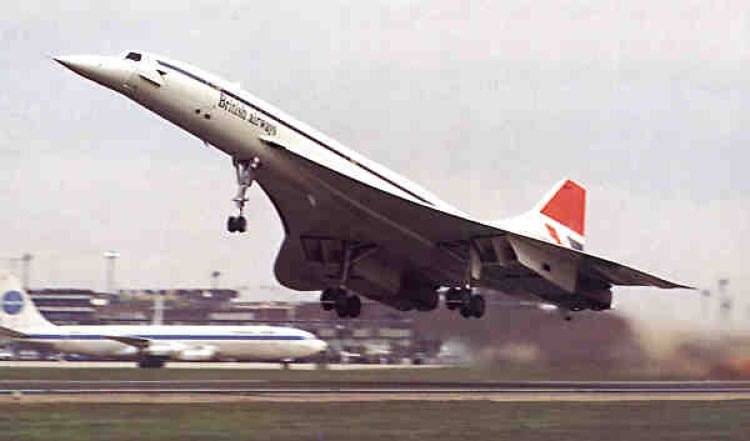
January 21, 2026, officially marked 50 years since the dawn of commercial supersonic travel, when British Airways (BA) and Air France simultaneously launched the world’s first scheduled Concorde flights at 11:40 UTC on January 21, 1976. The milestone celebrates not only a technological breakthrough in aviation, but also Bahrain’s unique place in Concorde history as BA’s inaugural destination.
To commemorate the golden jubilee, a series of high-profile events took place across the United Kingdom, honoring Concorde’s legacy of speed, innovation, and engineering excellence.
Among the highlights, the UK’s Royal Mail unveiled a special commemorative set of 12 stamps, showcasing Concorde’s iconic design, advanced aerodynamics, and its transformative role in global air travel. The release pays tribute to an aircraft that redefined what was possible in commercial aviation.
At precisely 11:40 am, three UK aviation museums including Aerospace Bristol and the Brooklands Museum staged synchronized “nose-drop” ceremonies, lowering the movable nose cones of their preserved Concorde aircraft in perfect unison. The carefully timed gesture mirrored the exact moment the original supersonic flights departed half a century earlier.
The anniversary was further marked by heritage dinners and gatherings, with former Concorde pilots, engineers, and cabin crew coming together at the Brooklands Museum. Attendees shared memories of the aircraft’s demanding operations, elite passenger experience, and the pride of flying the world’s fastest commercial jet.
The celebrations also renewed attention on the historic 1976 British Airways flight BA300, which departed London Heathrow bound for Bahrain International Airport. The journey took approximately 3 hours and 38 minutes, nearly halving conventional subsonic travel time and cementing Bahrain’s role as the first destination in Concorde’s commercial service.
That same day, Air France flight AF025 departed Paris en route to Rio de Janeiro via Dakar, underscoring the truly global nature of Concorde’s debut and the coordinated launch of the supersonic era.
The aircraft that carried BA300 Concorde G-BOAA (Alpha Alpha) has since become a treasured aviation artifact and is now preserved on public display at the National Museum of Flight in Scotland, where it continues to inspire new generations of aviation enthusiasts.
Fifty years on, Concorde’s first flight to Bahrain remains a defining moment in aviation history a symbol of ambition, international cooperation, and a time when the world briefly flew faster than sound.