Italy considers sending SAMP/T air-defense systems to Gulf states amid escalating Iran tensions
 supriyatunk
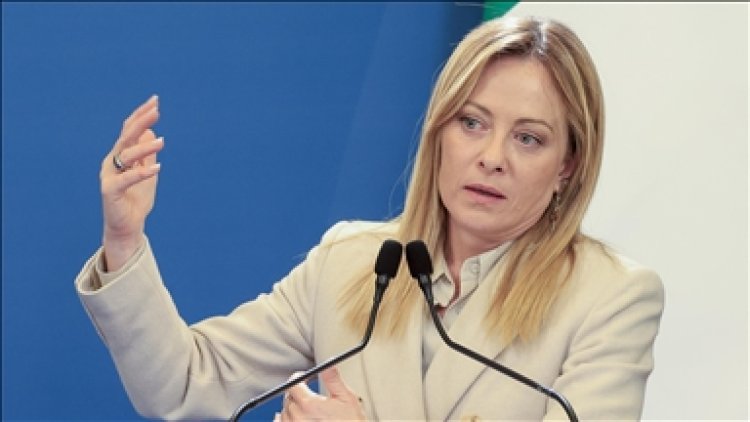
Italy is considering sending advanced air defense assistance to Gulf countries targeted by Iranian missile and drone strikes, Prime Minister Giorgia Meloni said on Thursday, as regional tensions rise following retaliatory attacks linked to the escalating conflict involving Iran, the United States, and Israel.
Speaking to Italian radio station RTL 102.5, Meloni confirmed that Italy intends to support Gulf partners alongside other European powers, including the United Kingdom, France, and Germany. She stressed that the assistance would be strictly defensive and focused on strengthening air-defense capabilities in the region.
“Italy, like the UK, France, and Germany, intends to send aid to the Gulf countries,” Meloni said. “We are clearly talking about defense, air defense, not only because they are friendly nations, but also because there are tens of thousands of Italians living in that area and around 2,000 Italian soldiers that we must protect.”
She added that stability in the Gulf is vital for European energy security, describing the region as “essential for energy supplies for Italy and Europe.”
Possible deployment of SAMP/T missile defence system
Italian officials said the government is evaluating the deployment of a battery from the SAMP/T air defense system, a Franco-Italian ground-based missile shield designed to intercept a wide range of airborne threats. Two sources told Reuters that Rome is leaning toward sending one of its SAMP/T systems, although a final decision has not yet been made.
Developed by the European consortium Eurosam, a joint venture between MBDA and Thales Group, the system is considered one of Europe’s most advanced air-defense platforms.
The SAMP/T system is designed to intercept ballistic missiles, cruise missiles, drones, and hostile aircraft. It uses the Aster 30 missile interceptor, capable of engaging targets at ranges of up to about 120 kilometers and at high altitude.
Mounted on mobile truck platforms equipped with radar and launch units, the system can be rapidly deployed and repositioned to protect critical infrastructure such as cities, military bases, ports, and energy facilities. Defense analysts often compare SAMP/T to the MIM-104 Patriot system used by the United States and several NATO allies.
Italian officials have not specified which Gulf country could receive the system, noting that a technical and strategic assessment is still under way.
Additional anti-drone systems under consideration
In addition to the missile defense system, Italy is also evaluating the rapid deployment of anti-drone defense technologies. According to sources familiar with the discussions, these systems could be transferred more quickly while decisions on larger air defense deployments are finalized.
Anti-drone systems are designed to detect, track, and neutralize unmanned aerial vehicles (UAVs) used for surveillance or attacks. They typically rely on a combination of radar, radio-frequency sensors, and electro-optical cameras to identify drones early and monitor their flight paths.
Once detected, drones can be neutralized through several methods, including electronic jamming, GPS spoofing, directed-energy systems, interceptor missiles, or specialized anti-aircraft guns.
The growing use of low-cost attack drones in modern conflicts, particularly in the Middle East, has made such systems a critical layer of defense for protecting airports, ports, oil facilities, and military bases.
Rising tensions across the Gulf
The proposed deployments come after Iranian retaliation following strikes by U.S. and Israeli forces on Iranian targets. In response, Tehran launched drones and missiles toward multiple locations across the Gulf region, reportedly targeting ports, cities, and energy infrastructure.
The Gulf is a cornerstone of global oil and gas supply chains, and any disruption to security in the region raises concerns for international energy markets and maritime trade routes.
European governments are increasingly worried that a wider regional conflict could threaten both energy flows and the safety of their citizens and military personnel stationed across the Middle East.
By considering the deployment of advanced air defense systems, Italy and its European partners aim to strengthen regional defenses and help deter further attacks while diplomatic efforts continue to prevent the conflict from escalating further.