
Rare ‘ring of fire’ annular solar eclipse set to dazzle skies on February 17, 2026
 supriyatunk
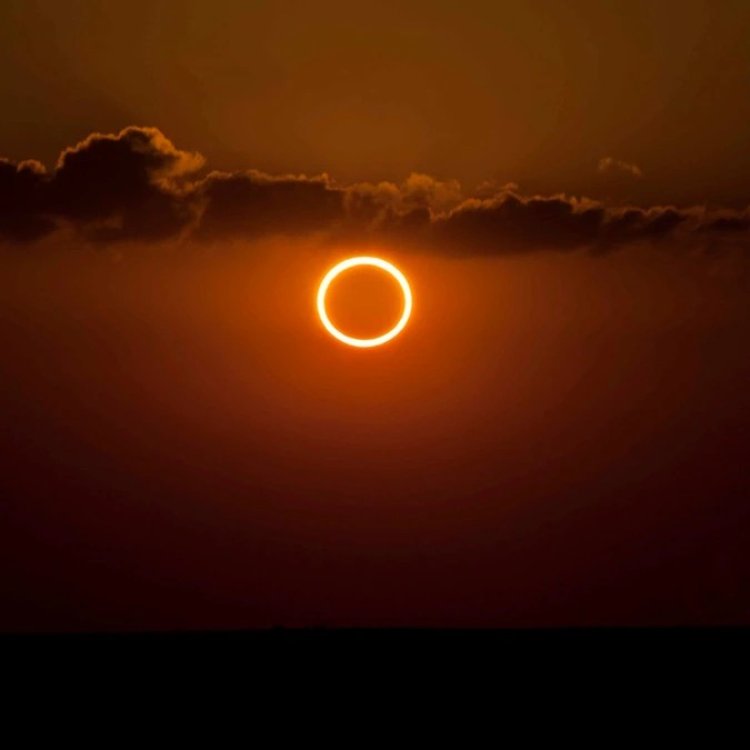
Astronomy enthusiasts around the world are turning their attention to February 17, 2026, when a rare and visually striking annular solar eclipse will take place, briefly transforming the Sun into a glowing “ring of fire.”
The phenomenon will occur when the Moon passes directly between the Earth and the Sun during the new moon phase. However, because the Moon will be slightly farther from Earth than usual, it will not completely cover the Sun’s disc. Instead, it will block roughly 96 percent of the sun’s center, leaving a bright halo of sunlight blazing around its edges.
At its peak, the annular phase of the eclipse is expected to last for up to two minutes and 20 seconds. During this time, the Sun will appear as a thin, luminous ring encircling the dark silhouette of the Moon, a dramatic effect that has long fascinated both scientists and skywatchers.
Despite global excitement, the eclipse will be visible in its annular form only from a remote stretch of Antarctica. This means that just a very limited number of observers will be able to witness the full “ring of fire” effect in person, while others around the world may only experience partial phases or follow the event through live streams and scientific coverage.
A solar eclipse occurs when the Moon aligns precisely between the Earth and the Sun, casting its shadow across the planet. In a total solar eclipse, the Moon completely obscures the Sun. In an annular eclipse, however, the Moon appears slightly smaller than the Sun, allowing sunlight to remain visible around its edges at maximum coverage. This distinctive ring-like appearance gives the annular eclipse its name and makes it one of the most photogenic and scientifically valuable types of solar eclipses.
Later in 2026, the skies will deliver another major celestial event: a total solar eclipse visible from parts of Greenland, western Iceland, and northern Spain. That eclipse is expected to last up to two minutes and 18 seconds and will occur just one day before the peak of the annual Perseid meteor shower, adding further excitement to an already remarkable year for astronomy enthusiasts.
With two significant solar eclipses on the calendar, 2026 is shaping up to be a memorable year for those who look to the skies in search of rare and awe-inspiring cosmic events.