Parliament Approves Linking Expat ID Card Validity to Residency Length
 Ashwini Gambo
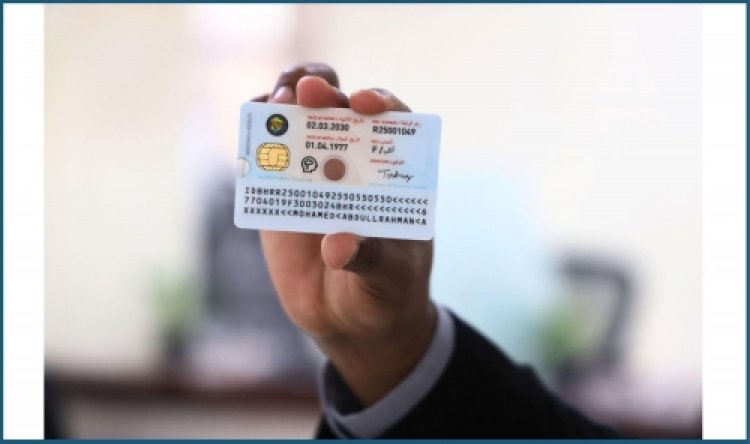
Parliament has approved an amendment linking the validity of expatriate ID cards to the length of legal residency in Bahrain, pushing the proposal through despite a recommendation from Parliament’s Foreign Affairs, Defence and National Security Committee to reject it in principle.
The bill was approved during Tuesday’s sitting after MPs voted down a motion to postpone the discussion, keeping the proposal on the agenda and clearing the way for a final vote.
The amendment revises Article 3 of Law No. 46 of 2006 on the ID Card by adding a new paragraph stipulating that, “in all cases,” a non-Bahraini’s ID card must not remain valid beyond the period of their legal residence in the Kingdom.
Justice Minister Nawaf Al Maawda told MPs that ID card fees are not fixed and remain “under review,” adding that the fee structure would be reassessed to ensure it reflects the actual cost of issuing the cards. He urged lawmakers to distinguish between carrying an ID card and holding a valid residence permit, warning that any individual or institution dealing with a person whose residency has expired would face consequences.
He noted that banks and other entities are held accountable through Labour Market Regulatory Authority (LMRA) procedures, and questioned whether employers had suffered harm from workers merely carrying an ID card. “Has any harm fallen on employers from carrying the card?” he asked.
Second Deputy Speaker Ahmed Qarata said he supported the objectives of the amendment but argued that parliamentary discussions revealed confusion over which authority is responsible for deactivating an expatriate’s ID card once residency expires. He cited a “lack of clarity” in responses from relevant bodies, pointing to differing roles attributed to the Central Bank of Bahrain, the Information and eGovernment Authority, and the LMRA.
Qarata also challenged claims that linking ID card validity to residency would increase operating costs, stating that issuing an ID card for a month or a year did not appear to result in higher expenses, and called for clearer explanations from officials.
MP Jalal Kadhem defended the amendment, describing it as necessary to close a legal gap created when ID cards are issued for five years while residence permits may be valid for only two. He argued that aligning the two would strengthen labour-market discipline, prevent misuse of ID cards after residency expires, and generate additional revenue without burdening citizens. Kadhem cited an expatriate population of approximately 850,000 and estimated foregone revenue at around BD8.5 million, while criticising what he described as the state absorbing a BD4 loss per card between the BD10 fee and a BD14 operating cost.
In response, Al Maawda maintained that sufficient enforcement tools already exist, noting that LMRA inspectors carry devices to verify residency status and that security services can confirm permit validity. He stressed that the primary function of the ID card is identity verification, concluding that the system operates on the presumption of lawful conduct. “The basic rule in the system is to assume good faith,” he said.
The amendment will now proceed to the next stage of Bahrain’s legislative process.