EEG opens 2026 with high-level panel on scaling renewables and grid stability
 supriyatunk
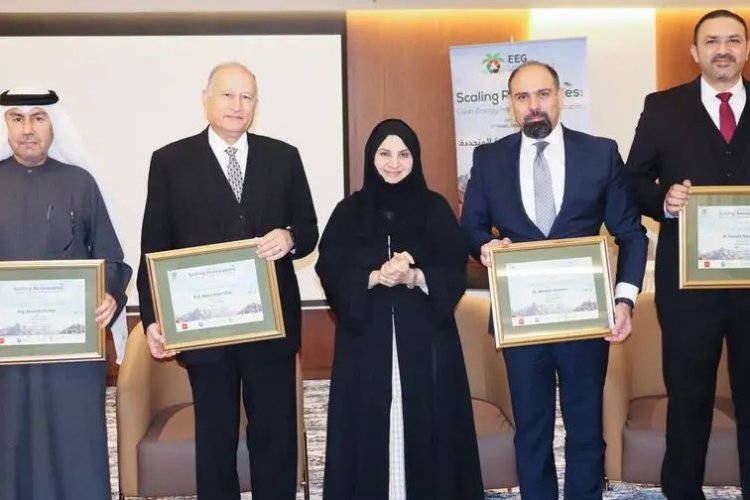
Emirates Environmental Group (EEG) kicked off its 2026 engagement calendar by successfully hosting its first panel discussion of the year, titled “Scaling Renewables: Clean Energy Integration and Grid Stability.” The event brought together policymakers, industry leaders, academics, and youth to explore the opportunities and challenges involved in transitioning to resilient, renewable-based power systems.
In her opening address, Dr. Habiba Al Mar’ashi, co-founder and chairperson of EEG, underscored the fundamental shift taking place in the global energy landscape. She emphasized that renewable energy has moved beyond being a peripheral alternative and is now a central pillar of economic competitiveness, climate action, and energy security. Citing projections from the International Energy Agency, Dr. Al Mar’ashi noted that renewables are expected to account for nearly 90 percent of global power capacity additions by 2030.
She stressed that scaling renewables is not simply about adding generation capacity but about integrating clean energy effectively into existing power systems while maintaining grid reliability, stability, and resilience. Dr. Al Mar’ashi outlined key global challenges, including intermittency, grid congestion, storage limitations, digital infrastructure gaps, and regulatory readiness. Addressing these, she said, requires coordinated planning, investment in smart grids and advanced storage, digitalization, demand-side management, and stronger regional collaboration.
The event commenced with EEG’s first Inter-School Debate of 2026, reaffirming the organization’s commitment to youth engagement and sustainability education. Students debated the motion “Renewables: The Ultimate Solution or an Overrated Challenge?” presenting well-researched arguments on both the potential and limitations of renewable energy systems. Al Sanawbar School, Al Ain, speaking for the proposition, argued that renewables offer sustainable, future-proof energy solutions that benefit both economies and the planet. Representing the opposition, Virginia International Private School, Abu Dhabi, contended that renewables face practical constraints that limit their ability to fully replace conventional energy at national and global scales. The debate highlighted strong critical thinking skills and environmental awareness among the participating students.
The expert panel that followed featured Eng. Faisal Ali Al Rashid, Senior Director of Demand Side Management at the Dubai Supreme Council of Energy; Ms. Maryam Mohammed Alshamsi, Head of the Energy Projects Modelling Section at the Ministry of Energy and Infrastructure; Prof. Abdul Ghani Olabi, Director of the Sustainable Energy and Power Systems Research Centre at the University of Sharjah; Dr. Waseem Hoeneini, Managing Partner at WMSJ; and Dr. Mostafa Shaaban, Director of the Energy, Water, and Sustainable Environment Research Center at the American University of Sharjah.
Panelists explored the technical, regulatory, and financial dimensions of clean energy integration, focusing on solutions such as energy storage systems, smart grids, and demand response mechanisms. Discussions also highlighted the growing role of green hydrogen as a long-duration energy storage option and a strategic enabler for high-renewable power systems. While recognizing its potential to enhance grid flexibility and support wider decarbonization efforts, speakers emphasized the need for supportive policies, targeted investments, and regional cooperation to overcome existing challenges.
The dialogue further examined how surplus renewable power can be effectively stored and utilized, alongside discussions on infrastructure readiness, cost considerations, regulatory frameworks, and market design. Experts also stressed the importance of leveraging data-driven tools and advanced digital technologies to optimize real-time grid management and future-proof energy infrastructure.
The session concluded with an interactive Q&A segment, during which participants engaged directly with the panelists, raising questions on implementation challenges, policy development, and innovative solutions shaping the future of renewable energy systems.