From pledge to practice: how L’Oréal is scaling sustainable beauty in the UAE
 supriyatunk
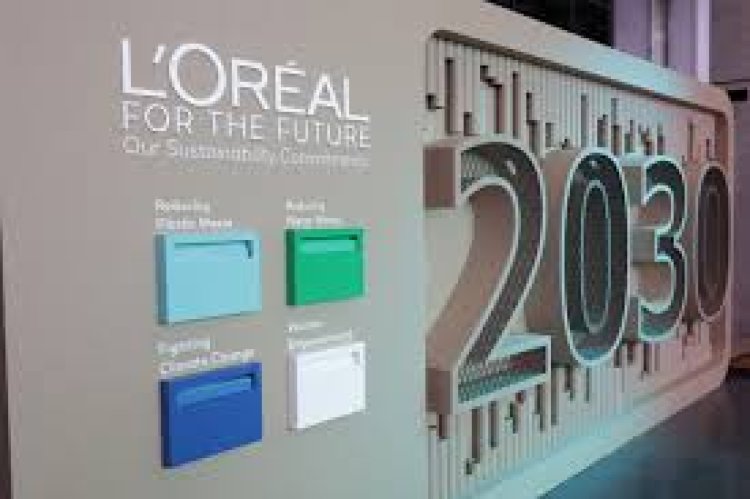
At this year’s Abu Dhabi Sustainability Week, L’Oréal made a clear case that sustainability in beauty has moved beyond long-term pledges to real-world execution.
From refillable fragrances and eco-designed retail materials to renewable energy use and lower-carbon logistics, the group is increasingly using the UAE as a testbed for circular beauty solutions, sustainable retail models, and supply-chain innovation.
The country plays a strategic role in L’Oréal’s global sustainability roadmap, L’Oréal for the Future, reflecting both its consumer maturity and national ambitions, according to Rohini Behl, chief sustainability officer for L’Oréal’s South Asia Pacific, Middle East, and North Africa Zone. The wider region under her leadership represents around 40 percent of the world’s population and is among the fastest-growing consumer markets globally.
“This is where the growth and future consumers are coming from,” Behl says. She adds that the UAE stands out for how quickly sustainability has moved from policy to practice. “At events like Abu Dhabi Sustainability Week, you can really feel that change is underway.”
While sustainability has become a competitive focus across consumer goods, Behl notes that L’Oréal’s approach has been shaped over decades. The company ended animal testing in 1989, set environmental targets for industrial sites in the 1990s, and launched sector-wide sustainability initiatives long before the topic became mainstream.
Today, its strategy is anchored around four pillars: stewarding the climate transition, safeguarding nature, driving circularity, and supporting communities.
On climate action, L’Oréal’s regional efforts are closely aligned with the UAE’s national net-zero ambitions. Its Dubai office now operates on 100 percent renewable energy, a shift Behl says highlights how corporate commitments depend on supportive national infrastructure and collaboration.
Beyond offices, the company is working with UAE-based partners to cut emissions across logistics and transport. Initiatives include deploying electric vehicle fleets with Mohebi Logistics and introducing biodiesel fuels through a partnership with Aramex to reduce emissions from cross-border operations. These steps, Behl explains, demonstrate how climate targets are being translated into operational decisions rather than remaining abstract goals.
Circularity is one of the most visible areas of progress, particularly through refillable beauty products. Across the GCC, and especially in the UAE, L’Oréal now offers refillable options across fragrance, skincare, haircare, and makeup, positioning refills as a core element of its circular economy model.
“We want to make refills desirable, accessible, and easy to use,” Behl says.
Consumer data suggests strong momentum. Ipsos research shows that three out of five consumers in the UAE are conscious of sustainability issues, while 97 percent acknowledge the need for environmental solutions. The challenge, Behl says, lies not in intent but in clarity.
“Consumers are willing to act but often lack clear, practical solutions,” she explains. Refillable formats aim to close that gap by allowing consumers to reuse premium packaging while significantly reducing material use. “It’s about delivering the same exceptional formulations consumers love, in packaging designed to reduce resources.”
The environmental impact is measurable. Refillable fragrances such as Prada Paradoxe reduce glass use by 44 percent, plastic by 67 percent, eliminate metals entirely, and cut cardboard by 61 percent. Similar reductions apply across other product categories, supporting L’Oréal’s wider goal of cutting virgin plastic use by 50 percent and increasing recycled and bio-based content by the end of the decade.
Retail partnerships are central to scaling these systems. In the UAE, L’Oréal works closely with retailers, including Sephora and BinSina Pharmacy, to increase the visibility and availability of refillable products, while training beauty advisers to guide consumers at the point of sale.
“It’s a collective responsibility,” Behl says. “Producers, retailers, and brands all play a role in shaping the market and educating consumers.”
Circularity also extends to retail infrastructure. L’Oréal Middle East reports that all its point-of-sale materials are now eco-designed, with suppliers required to measure, report, and optimize the carbon footprint of in-store assets. The company is also an active member of the Circular Packaging Association, collaborating with industry peers to accelerate innovation and standard-setting.
Alongside environmental action, social impact remains a core pillar of the group’s regional strategy. Through its Inclusive Sourcing Programme, L’Oréal integrates social criteria into procurement, supporting more than 100 beneficiaries in the UAE last year by creating economic opportunities for people from underprivileged backgrounds.
The company also invests in education, health, and gender equity initiatives, including the L’Oréal-UNESCO For Women in Science Middle East programme, which has supported 23 UAE-based researchers. L’Oréal Middle East has also signed the UAE Gender Balance Council’s SDG 5 Pledge, with women representing 56 percent of its workforce and more than half of leadership roles.
Looking ahead, Behl says L’Oréal’s priorities in the UAE and wider region will focus on accelerating progress towards net zero, expanding circularity across packaging and retail systems, and deepening community impact.
“The UAE has shown what becomes possible when sustainability is backed by clear national ambition and real collaboration,” she says.
“Sustainability cannot only be an intention. It’s about accountability and the ability to turn commitments into action at scale.”