
Red-Necked Ostrich Returns to Saudi Desert in Landmark Rewilding Effort
 Ashwini Gambo
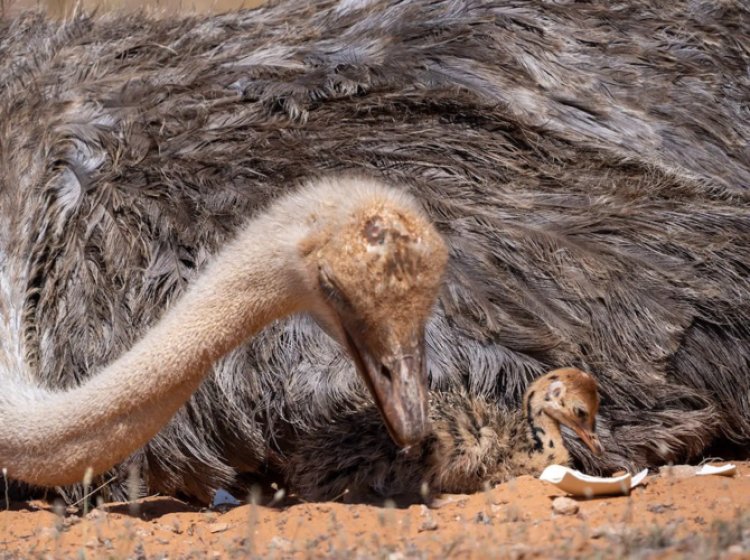
The Prince Mohammed bin Salman Royal Reserve has reached a significant milestone in its ambitious rewilding program with the reintroduction of the critically endangered red-necked ostrich. Historically referred to as the “camel bird,” the species has been introduced as a biological replacement for the extinct Arabian ostrich, which disappeared from the region nearly a century ago.
Once roaming widely across the deserts of the Arabian Peninsula, the Arabian ostrich became extinct in the early 20th century as a result of excessive hunting and widespread habitat degradation. Its loss marked the disappearance of one of the desert’s most influential large species, with lasting impacts on ecosystem balance.
The red-necked ostrich, the closest surviving genetic relative of the Arabian ostrich, was carefully selected for reintroduction due to its strong biological similarities and proven ability to survive in harsh, arid environments. An initial founder group of five ostriches has now been released into the reserve under a board-approved conservation plan.
Covering an expansive 24,500 square kilometers of terrestrial and marine landscapes, the Prince Mohammed bin Salman Royal Reserve aims to restore historical biodiversity and ecological processes. With this release, the ostrich becomes the 12th of 23 historically native species slated for reintroduction as part of the reserve’s long-term ecosystem restoration strategy.
Andrew Zaloumis, CEO of the Prince Mohammed bin Salman Royal Reserve, emphasized that the return of the ostrich represents a crucial step in rebuilding desert ecosystems historically shaped by large grazing and browsing animals. The initiative reflects a broader commitment to conservation, sustainability, and the revival of Saudi Arabia’s natural heritage.