Russia Plans Nuclear Power Plant on the Moon Within a Decade
 Ashwini Gambo
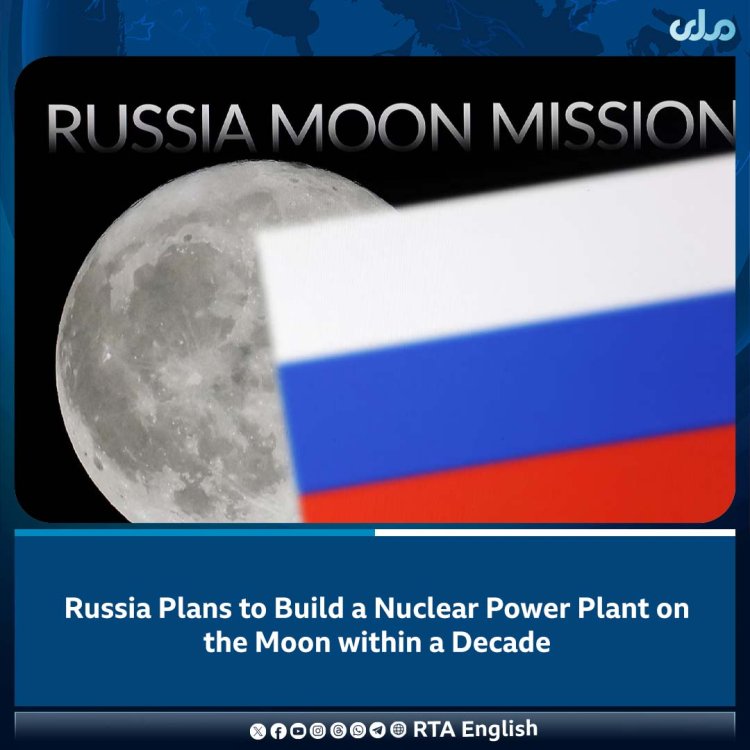
Russia has announced plans to construct a power plant on the moon within the next decade to support its expanding lunar exploration programme and a joint research station with China. The project reflects the growing competition among major global powers to establish a long-term presence on Earth’s only natural satellite.
Russia’s state space corporation, Roscosmos, said it aims to build the lunar power facility by 2036 and has signed a contract with the Lavochkin Association, an aerospace company, to carry out the project. While Roscosmos did not explicitly confirm that the facility would be nuclear-powered, the involvement of Russia’s state nuclear corporation Rosatom and the Kurchatov Institute strongly suggests the use of nuclear energy.
The proposed power plant is intended to supply energy for lunar rovers, scientific observatories, and infrastructure supporting the Russian-Chinese International Lunar Research Station. Roscosmos described the initiative as a key step toward transitioning from short-term missions to a permanently operating scientific base on the moon.
The announcement comes as Russia seeks to reaffirm its position in space exploration. Once a global leader following Soviet cosmonaut Yuri Gagarin’s historic spaceflight in 1961, Russia has faced setbacks in recent years, including the failure of its Luna-25 mission in August 2023. At the same time, the United States and China have accelerated their lunar ambitions.
Russia is not alone in exploring nuclear energy solutions for the moon. NASA has also declared its intention to deploy a nuclear reactor on the lunar surface by 2030, citing the need for reliable energy to support long-term human presence and future missions to Mars.
International treaties prohibit the placement of nuclear weapons in space but allow nuclear energy systems under specific regulations. Scientists and space agencies believe such power sources are essential for sustained exploration, particularly as interest grows in the moon’s natural resources, including Helium-3 and rare earth elements used in advanced technologies.