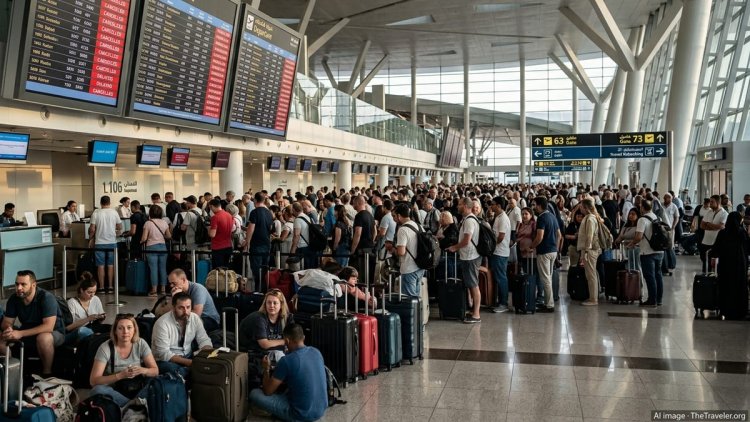
A five-day ceasefire declared by the United States has led to the partial reopening of airspace across parts of the Middle East, offering temporary relief after weeks of conflict-driven disruptions.
The reopening, however, has triggered widespread travel chaos across major regional hubs, including the United Arab Emirates, Qatar, and Egypt. Thousands of passengers are now scrambling to leave the region, leading to congestion at airports, flight delays, and limited seat availability.
The aviation crisis began following a sharp escalation in regional tensions after joint strikes by the United States and Israel on Iran on February 28. The strikes were followed by retaliatory missile and drone attacks, prompting widespread airspace closures as countries moved to ensure aviation safety.
During the peak of the conflict, several airlines suspended operations or rerouted flights to avoid high-risk zones. Major international routes were disrupted, with aircraft forced to take longer paths, increasing travel time and operational costs.
The partial reopening of airspace has now allowed airlines to gradually resume services, but the sudden surge in demand has overwhelmed the system. Passengers who were stranded or had their travel plans disrupted are rushing to rebook flights, creating bottlenecks across booking platforms and airport terminals.
Airlines are working to restore schedules, but challenges remain due to aircraft positioning, crew availability, and ongoing security assessments. Authorities continue to monitor the situation closely, and further changes to airspace access may depend on how the ceasefire holds in the coming days.
Travelers have been advised to check flight statuses regularly, arrive early at airports, and remain prepared for last-minute changes. Flexible booking options and travel insurance are also being recommended to manage uncertainty.
While the ceasefire has provided a brief window for recovery, the situation remains fluid. The disruption highlights how quickly geopolitical conflicts can impact global aviation, affecting not just regional travel but international connectivity as well.

 supriyatunk