King Hamad participates in Gaza reconstruction summit in Washington
 supriyatunk
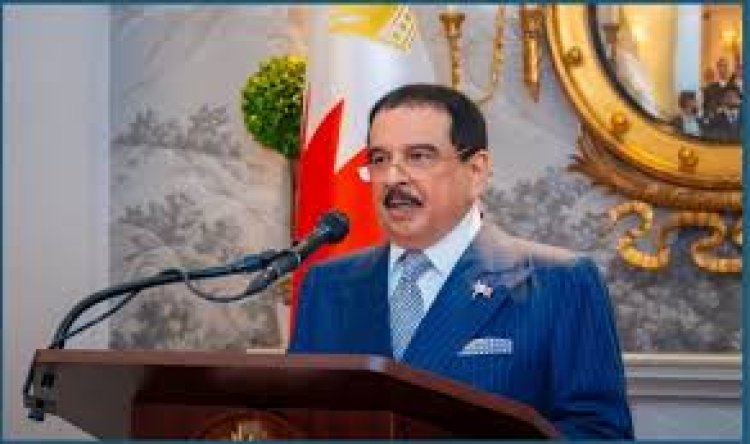
His Majesty Hamad bin Isa Al Khalifa of Bahrain participated in the inaugural meeting of the Board of Peace on February 19, 2026, at the Donald J. Trump Institute of Peace in Washington, DC. The summit was chaired by US President Donald Trump and centered on the reconstruction of the Gaza Strip and the implementation of a broader regional peace framework.
During the meeting, leaders discussed overseeing a Gaza ceasefire, coordinating humanitarian access, and launching a long-term reconstruction strategy. A key proposal included the formation of an “International Stabilization Force” of approximately 20,000 personnel aimed at maintaining stability and supporting governance structures in the territory.
President Trump announced that member states have pledged more than $5 billion toward humanitarian and reconstruction efforts, while the United States committed a separate $10 billion to the initiative. The funding is intended to accelerate rebuilding efforts and ensure sustained support for infrastructure, public services, and economic recovery.
King Hamad stated that Bahrain is prepared to contribute by providing infrastructure and technical expertise to establish an effective government digital services platform for Gaza. The initiative would focus on strengthening public administration systems, improving service delivery, and enhancing transparency as part of broader governance reforms.
The summit was attended by representatives from approximately 40 countries. Heads of state and government present included leaders from Egypt, Jordan, Kazakhstan, Albania, Azerbaijan, and Armenia, while India participated as an observer nation.
Following the meeting, King Hamad hosted a Ramadan reception in Washington attended by notable figures including Kassym-Jomart Tokayev, US Special Envoy Steve Witkoff, and Senior Advisor Jared Kushner. In his address, the King reaffirmed Bahrain’s 130-year partnership with the United States and highlighted the importance of the Abraham Accords as a foundation for regional stability, stressing that cooperation, reconstruction, and digital governance reform remain central to advancing long-term peace.