
Global Award Puts Palladium at the Centre of Future Technology
 Ashwini Gambo
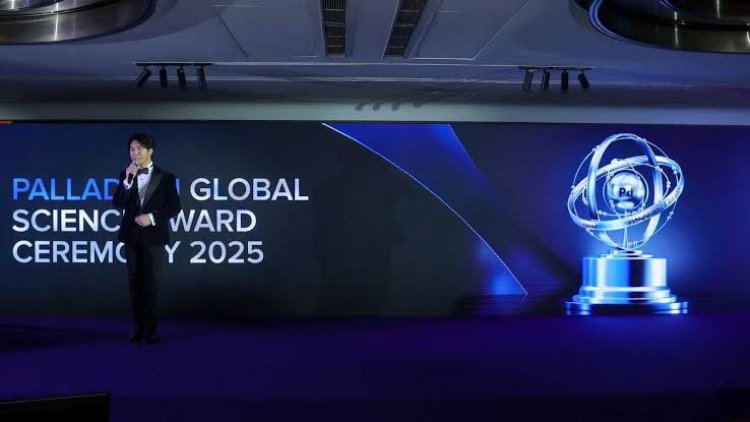
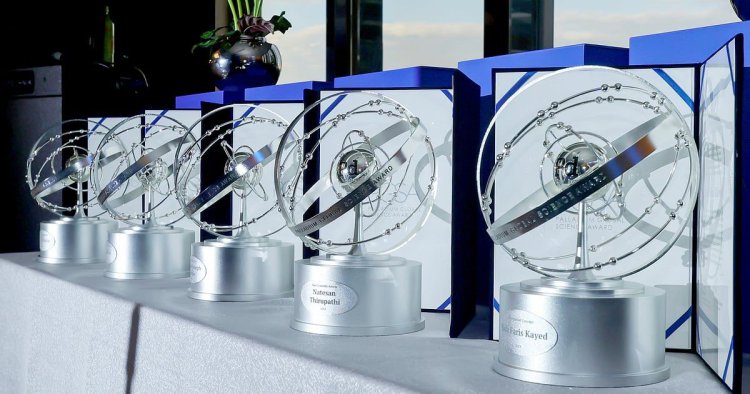
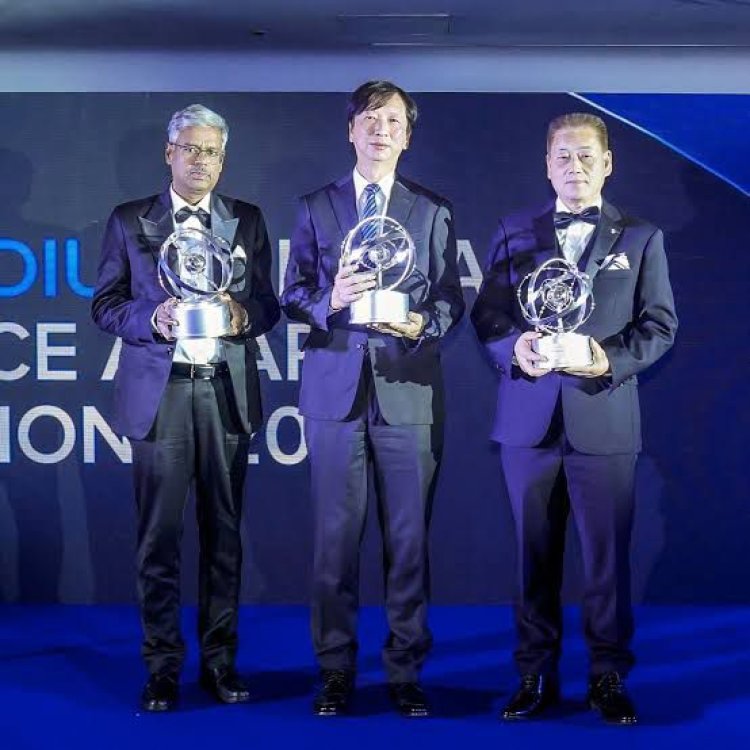
Hong Kong marked a significant milestone in scientific and industrial innovation with the launch of the inaugural Palladium Global Science Award, the first international awards programme dedicated to advancing palladium’s role in high-impact technologies. Five scientists from Canada, Japan, India, the United States, and Saudi Arabia were honoured on November 21 across three categories, sharing a combined prize fund of $350,000.
Supported by the China Precious Metals Industry Committee (CPMIC), alongside partners including Shanghai Metals Market, North-West University in South Africa, and Japan’s MDX Research Center for Element Strategy, the award aims to propel palladium into a new era of applications from catalysis and electronics to clean energy, medicine, and environmental protection.
The ceremony gathered leading scientists, industry leaders, and policymakers, underlining palladium’s growing strategic importance as a driver of decarbonisation, green manufacturing, and next-generation materials research.
A Strategic Prize for a Strategic Metal
CPMIC Executive Chairman Bian Jiang said the award responds to a global need to push precious metals into transformative new domains.
“Palladium is widely known as a powerful catalyst and an essential component in alloys for high-tech industries and clean manufacturing,” he said. “Expanding its applications is crucial for long-term industry growth.”
Jiang emphasised that the award serves as a bridge between research and real-world needs, enabling promising technologies to move closer to commercialisation. Nearly 100 project submissions from more than 30 countries reflected the scale of interest.
“When positioned correctly within a technological architecture, palladium becomes a natural amplifier of innovation,” he noted, adding that the award also helps shift focus from market volatility to palladium’s intrinsic long-term value.
Power to Reshape Industries
The competition’s International Expert Council, chaired by Professor Francis Verpoort, applied a rigorous evaluation process.
“The strongest applications were those where elegant science met practical engineering,” Verpoort said. “These developments have the power to reshape industries, enhance sustainability, and address global challenges.”
Verpoort added that the inaugural edition may shape global palladium-focused research for years to come: “What begins here in 2025 could define how the world harnesses this remarkable metal for decades.”
Winning Projects Redefine Palladium’s Potential
Best Scientific Developments in New Palladium Applications – First Place
Prof. Chao-Jun Li, McGill University, Canada
Prof. Li achieved a breakthrough by simultaneously activating methane and CO₂, two notoriously inert molecules, using a palladium-doped semiconductor under light irradiation. A McGill spin-off, CataLum Inc., has licensed the technology for early-stage scaling, with applications in converting waste gases into methanol.
Best Scientific Developments – Second Place
Prof. Makoto Fujita, University of Tokyo & Institute for Molecular Science, Japan
Fujita’s pioneering work in palladium-based self-assembly led to the crystalline sponge method, a molecular analysis technique poised to transform pharmaceutical research.
Best Scientific Article – First Place
Prof. Natesan Thirupathi, Delhi University, India
Thirupathi explored cyclopalladation processes that can accelerate drug development while enabling greener pharmaceutical chemistry.
Best Scientific Article – Second Place
Prof. Michael Joseph Krische, University of Texas at Austin, USA
Krische’s research focuses on direct formate-mediated cross-couplings, offering safer and more cost-effective routes to key medical compounds.
Best Applied Concept – First Place
Associate Prof. Safa Faris Kayed, Prince Sattam Bin Abdulaziz University, Saudi Arabia
Her project, PalladClear, targets industrial wastewater treatment by using palladium-driven technologies to degrade hazardous dyes and pharmaceutical residues moving next toward pilot-scale deployment.
A Platform for Future Breakthroughs
The Palladium Global Science Award extends beyond trophies and recognition. CPMIC says commercialisation support, industrial partnerships, and collaborative platforms will follow to ensure promising breakthroughs reach real-world application.
“We are building an ecosystem where scientists, entrepreneurs, and industry experts can collaborate and develop new technologies together,” Jiang said.
With the next edition scheduled for spring 2026, momentum is already building. From clean energy solutions to advanced medical innovation, palladium is stepping into the spotlight not merely as a commodity, but as a catalyst for the technologies of the future.